It doesn’t go straight to landfill
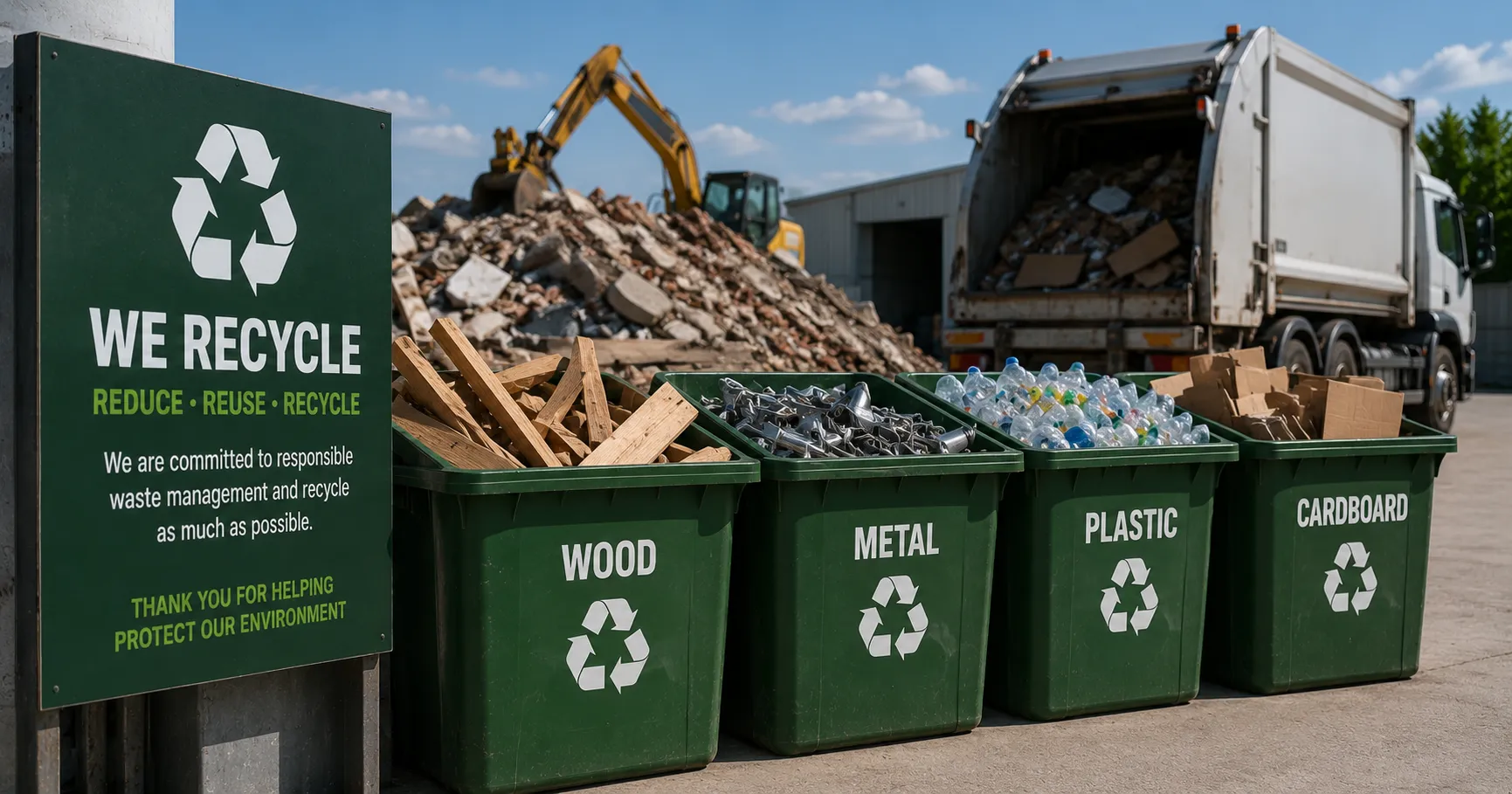
A common assumption is that a tipper full of mixed waste can only end up in one place. In reality, everything we collect goes to a licensed waste transfer station first, not straight to landfill. That’s where the real sorting happens — materials that can be recycled are separated out, and only what genuinely can’t be recovered is sent on as residual waste. Landfill is the last resort in that process, not the default.
What typically gets separated out
Soil and rubble from groundworks and demolition is a good example — a lot of it can be crushed and reused as hardcore or aggregate rather than buried, which is part of why muck-away work is worth doing properly rather than just dumping. Wood, metal, cardboard and general recyclables are pulled out and sent to the right processors. Garden waste is composted rather than landfilled. Even within a mixed house-clearance load, transfer stations are set up to recover as much as they reasonably can before anything is written off as residual.
Why not everything can be recycled
It would be misleading to claim 100% of every load is recycled — some materials genuinely can’t be, either because they’re contaminated, mixed in a way that can’t be practically separated, or simply have no viable recycling route at the moment. Being upfront about that matters more to us than an inflated number that sounds good but isn’t true. What we can say honestly is that using a licensed carrier and a proper transfer station means your waste gets every reasonable chance to be recovered, rather than none at all.
Why this matters more than people think
The alternative to a proper transfer station is waste going to an unlicensed operator, or worse, being fly-tipped — and in both cases, nothing gets recycled at all. Choosing a licensed carrier isn’t just a legal box to tick; it’s the difference between your old sofa or garden waste actually being processed responsibly, or quietly becoming somebody else’s problem in a hedge somewhere.