Why electrical items are treated differently from everything else
Fridges, TVs, laptops, kettles, power tools — anything with a plug or a battery falls under WEEE (Waste Electrical and Electronic Equipment) rules, and by law it has to be collected, treated and recycled separately from general waste. The reason is that a lot of electrical equipment contains materials that are genuinely harmful if they end up in landfill — refrigerants in fridges and freezers, lead and mercury in older screens and bulbs, and various other substances that need to be handled properly rather than crushed into a general waste stream.
What actually happens to it
Once collected, electrical items go to a specialist facility rather than a general waste transfer station. Fridges and freezers have their refrigerant gases safely removed before the casing is recycled. Screens, computers and other electronics are broken down so the metals, plastics and circuit boards can each be recovered and recycled properly. It’s a slower, more careful process than general waste — which is exactly why it costs more to handle and why it’s treated as a separate item on a quote rather than lumped in with everything else.
The bit people forget: your data doesn’t disappear on its own
If you’re getting rid of a computer, laptop, phone, or even some smart devices, there’s a good chance personal or business data is still sitting on it. Recycling the hardware doesn’t automatically wipe what’s on it. Before it leaves your hands, back up anything you need and either wipe the device yourself (a factory reset is a reasonable minimum for most personal devices) or have it professionally destroyed if it’s held anything sensitive. For businesses in particular, this matters for GDPR compliance — if a device held customer or staff data, how it’s disposed of is your responsibility, not just an IT afterthought.
Items we regularly collect
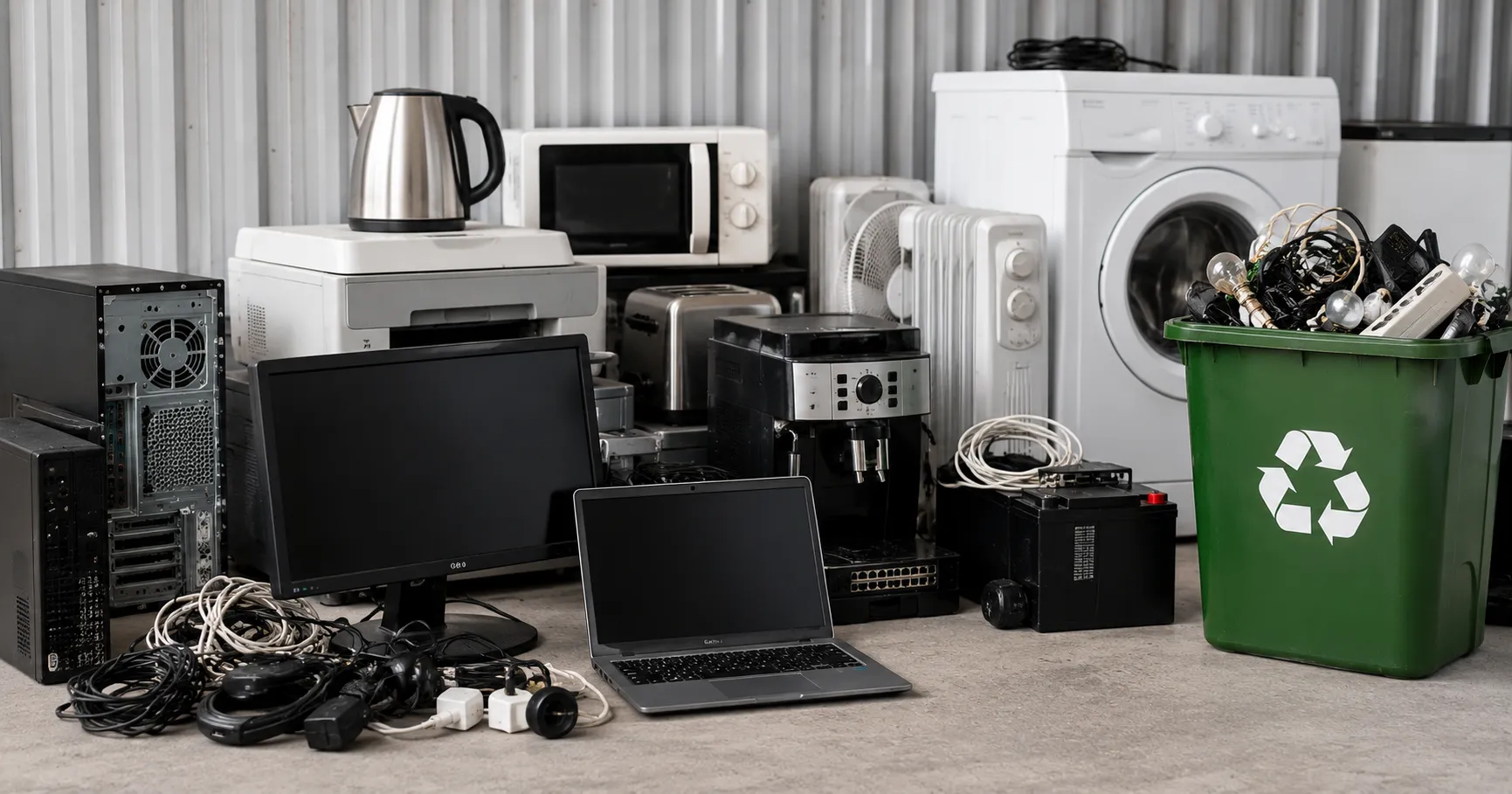
Fridges, freezers and other cooling appliances; washing machines, dryers, dishwashers and ovens; TVs and monitors; computers, laptops and printers; and general household electricals. These are handled as part of a wider clearance or collected on their own — either way, just mention them when you get a quote so it’s priced accurately, since they’re handled differently from general waste.
At a glance
- Fridges, freezers and cooling appliances (refrigerant removed safely)
- Washing machines, dryers, dishwashers and ovens
- TVs, monitors, computers and laptops
- General household electricals and cabling